
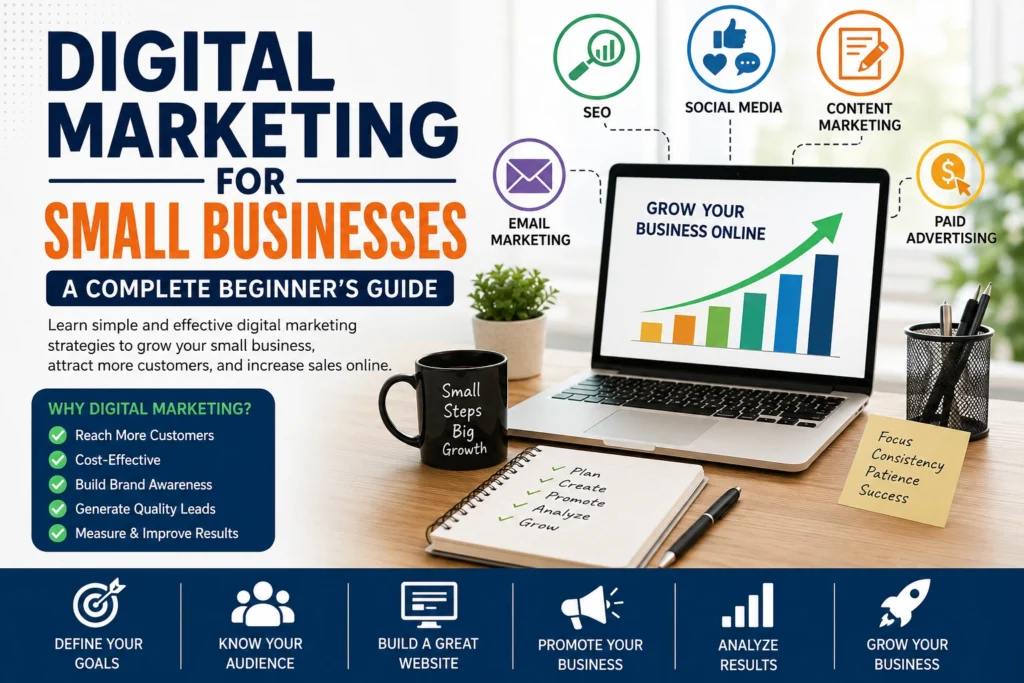
Running a small business is not easy. You need customers, trust, and steady growth. Today, most people search online before they buy any product or service. That is why digital marketing has become one of the most important tools for every small business.
At Digital Orbitz, we help small businesses build a strong online presence with smart and affordable digital marketing solutions. Our goal is to help brands attract more customers, generate quality leads, and grow their business through effective online strategies.
Whether you own a local shop, a startup, or a service-based business, this beginner’s guide will help you understand Digital Marketing for Small Businesses in a simple and practical way.
What is Digital Marketing for Small Businesses?
Digital Marketing for Small Businesses means promoting your products or services through online platforms. Instead of depending only on newspapers, banners, or television, businesses use the internet to reach potential customers.
Digital marketing helps small businesses connect with people where they spend most of their time. This includes search engines, social media, websites, emails, and mobile devices.
The best part is that digital marketing works for businesses of every size. Even if you have a small budget, you can compete with larger companies by using the right strategy.
Why Digital Marketing is Important for Small Businesses
Many small business owners believe digital marketing is expensive or difficult. The truth is very different.
Digital marketing offers many benefits that traditional marketing cannot provide.
Reach More Customers
Your business is not limited to your local area anymore. People from different cities can discover your products and services online.
Save Marketing Costs
Online marketing usually costs less than traditional advertising. You can start with a small budget and increase it as your business grows.
Build Brand Awareness
People trust businesses they see regularly online. A strong online presence helps customers remember your brand.
Generate Quality Leads
Digital marketing allows you to target people who are already interested in your products or services. This increases your chances of getting new customers.
Measure Results
Unlike traditional marketing, digital marketing lets you measure every campaign.
You can track:
- Website visitors
- Leads
- Sales
- Clicks
- Customer engagement
- Return on investment
These reports help you improve future marketing campaigns.
Benefits of Digital Marketing for Small Businesses
Many businesses have grown faster because they invested in digital marketing.
Here are some important benefits.
Better Customer Engagement
You can communicate directly with customers through social media, emails, and live chat.
Quick replies build trust.
Higher Conversion Rate
People who search online often have buying intent.
This means they are already looking for products or services like yours.
Long-Term Growth
Good digital marketing creates lasting results.
For example, a well-written blog can bring visitors for many months.
Improved Brand Reputation
Positive reviews, helpful content, and active social media pages make your business appear more trustworthy.
Better Customer Support
Customers can contact your business anytime through your website or social media platforms.
Fast support improves customer satisfaction.
Main Types of Digital Marketing
There are many digital marketing methods.
Each one has its own purpose.
Let’s understand them one by one.
Search Engine Optimization (SEO)
SEO means improving your website so it appears higher on search engines like Google.
When people search for your services, your website has a better chance of appearing in search results.
SEO includes:
- Keyword research
- On-page SEO
- Technical SEO
- Link building
- Content creation
- Local SEO
SEO takes time.
However, it provides long-term traffic without paying for every visitor.
Content Marketing
Content marketing means creating useful information that helps your audience.
Examples include:
- Blog articles
- Guides
- Videos
- Infographics
- Case studies
- Checklists
Helpful content builds trust.
It also improves your SEO.
Instead of selling directly, content marketing solves customer problems.
This encourages people to choose your business.
Social Media Marketing
Millions of people use social media every day.
Platforms include:
- X (Twitter)
- YouTube
Small businesses can use social media to:
- Share updates
- Build relationships
- Answer customer questions
- Promote products
- Generate leads
Posting consistently helps increase visibility.
Pay-Per-Click Advertising (PPC)
PPC allows businesses to display paid advertisements on search engines and social media.
You only pay when someone clicks your advertisement.
Popular PPC platforms include:
- Google Ads
- Facebook Ads
- Instagram Ads
- LinkedIn Ads
PPC works well if you want fast traffic and quick leads.
Email Marketing
Email marketing remains one of the highest-return marketing channels.
Businesses collect email addresses from interested visitors.
Then they send:
- Newsletters
- Offers
- Product updates
- Educational content
- Event invitations
Regular emails keep customers connected with your business.
Local SEO
Local SEO is very important for businesses that serve a specific area.
Examples include:
- Restaurants
- Clinics
- Salons
- Gyms
- Coaching centers
- Repair services
Local SEO helps your business appear when people search for nearby services.
For example:
- Best bakery near me
- Digital marketing agency in Delhi
- Laptop repair near me
Creating and optimizing your Google Business Profile plays a major role in local SEO.
Website Marketing
Your website is your online office.
Every digital marketing activity eventually brings visitors to your website.
A good website should have:
- Fast loading speed
- Mobile-friendly design
- Clear navigation
- Secure HTTPS connection
- Easy contact forms
- Strong call-to-action buttons
A professional website creates a positive first impression.
Video Marketing
Videos attract more attention than plain text.
Small businesses can create videos about:
- Product demonstrations
- Customer testimonials
- Tutorials
- Behind-the-scenes content
- Frequently asked questions
Short videos perform especially well on social media platforms.
Video content increases engagement and improves brand awareness.
How to Create a Digital Marketing Strategy for Small Businesses
Many businesses fail because they market without a clear plan.
A simple strategy improves your chances of success.
Step 1: Set Your Goals
Ask yourself:
- Do you want more website visitors?
- Do you want more phone calls?
- Do you want more sales?
- Do you want better brand awareness?
Clear goals help you choose the right marketing activities.
Step 2: Understand Your Audience
Know your ideal customer.
Learn about:
- Age
- Location
- Interests
- Problems
- Buying habits
The better you know your audience, the better your marketing becomes.
Step 3: Study Your Competitors
Look at businesses offering similar products or services.
Observe:
- Their website
- Their social media
- Their blogs
- Their advertisements
- Their customer reviews
You can learn valuable ideas while finding opportunities they may have missed.
Step 4: Choose the Right Marketing Channels
You do not need every platform.
Choose only those that match your audience.
For example:
- B2B businesses often perform well on LinkedIn.
- Local businesses benefit from Google Business Profile and Local SEO.
- Fashion brands usually grow faster on Instagram and Facebook.
Choose the Right Budget for Digital Marketing
Many small business owners think they need a huge budget to succeed online. That is not true.
You can start with a small investment and increase your budget as your business grows.
A beginner can divide the budget like this:
- 40% for SEO and content marketing
- 30% for paid advertising
- 20% for social media marketing
- 10% for email marketing and marketing tools
This is only an example. Your budget depends on your business goals and industry.
The most important thing is to track your results and invest more in the channels that generate the best return.
Essential Digital Marketing Tools for Small Businesses
Using the right tools can save time and improve your marketing efforts.
Here are some popular tools every beginner should know.
Google Analytics
Google Analytics helps you understand your website visitors.
It shows:
- Number of visitors
- Traffic sources
- Popular pages
- User behavior
- Conversion data
These insights help you make better marketing decisions.
Google Search Console
Google Search Console shows how your website performs on Google Search.
It helps you:
- Monitor keyword rankings
- Fix website errors
- Submit sitemaps
- Improve SEO performance
Every website owner should use this free tool.
Canva
Canva allows anyone to create professional graphics.
You can design:
- Social media posts
- Blog images
- Infographics
- Flyers
- Presentations
It is simple and beginner-friendly.
Meta Business Suite
If you use Facebook or Instagram for marketing, Meta Business Suite helps you:
- Schedule posts
- Reply to messages
- View insights
- Run advertisements
It makes social media management easier.
Email Marketing Software
Email marketing platforms help you send newsletters automatically.
You can:
- Build email lists
- Create campaigns
- Track open rates
- Measure clicks
Automation saves time and keeps customers engaged.
How SEO Helps Small Businesses Grow
Search Engine Optimization is one of the most valuable digital marketing strategies.
Unlike paid ads, SEO continues to bring visitors even after you stop spending money.
Here are some SEO tips for beginners.
Research the Right Keywords
Choose keywords your customers actually search for.
Focus on:
- Short keywords
- Long-tail keywords
- Local keywords
For example:
- Digital Marketing for Small Businesses
- Affordable digital marketing services
- SEO services for local businesses
Use keywords naturally throughout your content.
Avoid stuffing keywords into every sentence.
Write Helpful Content
Google rewards websites that provide useful information.
Answer common customer questions.
Create content that solves real problems.
Long, detailed articles usually perform better than short articles.
Optimize Page Titles
Every page should have:
- A clear title
- A short meta description
- Proper headings
- Keyword placement
These elements improve search visibility.
Improve Website Speed
Visitors leave slow websites quickly.
Improve speed by:
- Compressing images
- Using quality hosting
- Removing unnecessary plugins
- Optimizing code
A fast website improves both user experience and SEO.
Make Your Website Mobile-Friendly
Most users browse websites on smartphones.
Your website should:
- Load quickly
- Display properly
- Be easy to navigate
Mobile-friendly websites perform better in search results.
Social Media Marketing Tips for Small Businesses
Social media helps businesses connect with customers every day.
You do not need to post constantly.
You need to post valuable content consistently.
Here are some ideas.
Share Educational Posts
Teach your audience something useful.
Examples include:
- Marketing tips
- Product guides
- Industry news
- Quick tutorials
Educational content builds trust.
Post Customer Reviews
Positive reviews create confidence.
Ask happy customers for testimonials.
Share them regularly.
People trust real customer experiences.
Show Behind-the-Scenes Content
Customers enjoy seeing the people behind the business.
You can share:
- Office life
- Product creation
- Team celebrations
- Daily work
This makes your brand feel more human.
Use Short Videos
Short videos receive high engagement.
Create videos about:
- Tips
- FAQs
- Product demos
- Success stories
Keep videos simple and easy to understand.
Content Marketing Ideas for Small Businesses
Many businesses struggle because they run out of content ideas.
Here are some easy topics.
- Beginner guides
- Frequently asked questions
- Product comparisons
- Industry trends
- Customer success stories
- Step-by-step tutorials
- Mistakes to avoid
- Tips and tricks
- Seasonal offers
- Business updates
Publishing quality content consistently improves SEO and builds authority.
Email Marketing Best Practices
Email marketing remains one of the most effective digital marketing channels.
Follow these simple practices.
Build Your Own Email List
Never buy email lists.
Collect emails through:
- Website forms
- Free guides
- Discounts
- Newsletter sign-ups
People who join voluntarily are more likely to become customers.
Write Clear Subject Lines
A good subject line encourages people to open your email.
Keep it short.
Create curiosity without being misleading.
Personalize Emails
Address customers by their names whenever possible.
Personalized emails usually receive better engagement.
Include a Clear Call-to-Action
Tell readers what to do next.
Examples include:
- Visit our website
- Book a free consultation
- Download the guide
- Contact us today
A clear call-to-action improves conversions.
Common Digital Marketing Mistakes Small Businesses Should Avoid
Many beginners make mistakes that slow their growth.
Avoid these common problems.
Ignoring SEO
Some businesses rely only on paid advertisements.
SEO provides long-term traffic.
Do not ignore it.
Posting Without a Strategy
Random posting rarely delivers results.
Create a content calendar.
Plan your content in advance.
Expecting Instant Results
Digital marketing takes time.
SEO may require several months.
Content marketing also needs consistency.
Stay patient.
Not Tracking Performance
Always monitor your campaigns.
Measure:
- Website traffic
- Leads
- Sales
- Engagement
- Conversion rate
Use the data to improve your strategy.
Forgetting Mobile Users
Most internet users browse on mobile devices.
Always test your website on smartphones.
A poor mobile experience can reduce conversions.
Measuring Your Digital Marketing Success
You cannot improve what you do not measure.
Track these important metrics.
- Website traffic
- Keyword rankings
- Lead generation
- Conversion rate
- Bounce rate
- Customer acquisition cost
- Return on investment (ROI)
- Social media engagement
- Email open rate
- Click-through rate
Review your reports every month.
Small improvements can create significant long-term growth.
Why Consistency Matters in Digital Marketing
Success does not happen overnight.
Businesses that publish helpful content regularly build stronger brands.
Consistency helps you:
- Gain customer trust
- Improve SEO rankings
- Increase website traffic
- Generate more leads
- Stay ahead of competitors
Even one quality blog post every week can make a noticeable difference over time.
Digital marketing is a long-term investment, not a one-time activity.
Future Trends in Digital Marketing for Small Businesses
Digital marketing changes every year. New technology, customer behavior, and online platforms continue to evolve. Small businesses that stay updated can gain a strong advantage over their competitors.
Here are some important trends to watch.
Artificial Intelligence (AI)
AI is making digital marketing easier and faster.
Businesses now use AI to:
- Create content ideas
- Improve customer support with chatbots
- Analyze marketing data
- Personalize customer experiences
- Automate repetitive tasks
AI should support your marketing efforts, but human creativity and expertise remain essential.
Voice Search Optimization
Many people now use voice assistants to search online.
Instead of typing, they ask questions like:
- “Where is the best bakery near me?”
- “Which digital marketing agency is affordable?”
- “How can I improve my website ranking?”
Writing content in simple language and answering common questions can help your website appear in voice search results.
Video Content Will Continue to Grow
Short videos have become one of the most popular types of online content.
Businesses should create videos that:
- Answer common questions
- Explain products or services
- Share customer success stories
- Give useful tips
- Introduce team members
Videos help people understand your business quickly and increase engagement.
Personalization
Customers expect businesses to understand their needs.
Personalized marketing includes:
- Product recommendations
- Personalized emails
- Targeted advertisements
- Custom landing pages
Personalization improves customer experience and increases conversions.
Local Search Will Become Even More Important
People often search for businesses near their location.
Keeping your business information accurate online is essential.
Make sure your business name, address, phone number, website, and working hours remain updated across all online platforms.
Positive customer reviews also help improve local visibility.
Beginner Tips for Digital Marketing Success
If you are just starting, keep things simple.
Follow these practical tips.
Start With One Goal
Do not try to do everything at once.
Choose one goal first.
Examples include:
- Increase website traffic
- Generate more leads
- Improve brand awareness
- Get more phone calls
Once you achieve one goal, move to the next.
Focus on Quality Instead of Quantity
Publishing one useful blog every week is better than publishing several low-quality articles.
The same rule applies to social media.
Helpful content always performs better than content created only for promotion.
Build Trust Before Selling
Customers prefer businesses that educate instead of constantly selling.
Share useful tips.
Answer questions.
Solve problems.
Trust leads to long-term customer relationships.
Keep Learning
Digital marketing changes regularly.
Read blogs.
Watch tutorials.
Learn from industry experts.
Continuous learning helps your business stay competitive.
Be Patient
SEO, content marketing, and social media growth require time.
Do not expect immediate success.
Businesses that stay consistent usually see better long-term results.
Simple Digital Marketing Checklist for Small Businesses
Use this checklist before launching your marketing efforts.
✔ Create a professional website.
✔ Make your website mobile-friendly.
✔ Improve website speed.
✔ Set up Google Analytics.
✔ Set up Google Search Console.
✔ Create and optimize your Google Business Profile.
✔ Research the right keywords.
✔ Publish helpful blog articles regularly.
✔ Stay active on social media.
✔ Collect customer reviews.
✔ Build an email list.
✔ Run targeted advertising campaigns when needed.
✔ Track your marketing performance every month.
✔ Update your strategy based on results.
Following these steps will help you build a strong online presence and achieve steady business growth.
Conclusion
Digital Marketing for Small Businesses is no longer optional. It is one of the most effective ways to reach new customers, build trust, and grow your business in today’s digital world.
You do not need a large budget or a big marketing team to get started. Begin with the basics. Build a professional website. Create helpful content. Improve your SEO. Stay active on social media. Connect with your audience through email marketing. Track your results and continue improving your strategy.
Success in digital marketing comes from consistency, patience, and providing value to your customers. Every small step you take today can lead to long-term business growth tomorrow.
If you want to grow your business faster and build a strong online presence, partnering with experienced professionals can make the journey easier. Digital Orbitz offers affordable and result-driven digital marketing solutions designed especially for small businesses. Whether you need SEO, social media marketing, paid advertising, website optimization, or content marketing, the right strategy can help you achieve sustainable growth.
Start today, stay consistent, and let digital marketing become the engine that drives your business forward.
What is Digital Marketing for Small Businesses?
Digital Marketing for Small Businesses is the process of promoting products or services through online channels such as search engines, websites, social media, email, and paid advertisements to attract more customers and increase sales.
Why is digital marketing important for small businesses?
Digital marketing helps small businesses reach more people, build brand awareness, generate quality leads, improve customer engagement, and compete with larger companies without spending a huge marketing budget.
Which digital marketing strategy is best for beginners?
Search Engine Optimization (SEO), content marketing, social media marketing, and email marketing are excellent starting points because they provide long-term value and help build customer trust.
How much should a small business spend on digital marketing?
The ideal budget depends on your business goals and industry. Many small businesses start with a small monthly budget, measure results, and gradually increase their investment as they grow.
How long does SEO take to show results?
SEO is a long-term strategy. Most businesses begin to notice meaningful improvements within three to six months, while stronger results often develop with consistent effort over time.
Can I do digital marketing without hiring an agency?
Yes. Many beginners can manage basic SEO, social media, and content marketing themselves. However, hiring an experienced agency can save time, improve results, and help your business grow faster.
What are the biggest mistakes small businesses make in digital marketing?
Common mistakes include ignoring SEO, posting without a strategy, expecting instant results, failing to track performance, and creating content that does not provide value to customers.
What is the first step in creating a digital marketing strategy?
The first step is to define your business goals and understand your target audience. Once you know who you want to reach and what you want to achieve, you can choose the right digital marketing channels and create an effective plan.
